
Temporariness and Its Trade-Offs: Hispanic Farmworker Recruitment and Community Well-Being in Ohio
In July 2024, as part of my master’s research project, I did exploratory fieldwork in two Ohio towns with many hired farmworkers to get a sense of what H-2A (a temporary labor program in the United States) worker housing looked like. After driving through suburban neighborhoods and considering going down long dirt driveways . . . I finally came across a huge, yet hidden, housing complex in Norwalk, Ohio. This complex is home to the growing local H-2A worker population and is a physical manifestation of a dramatic shift in how farmers in the U.S. recruit and hire farm labor.
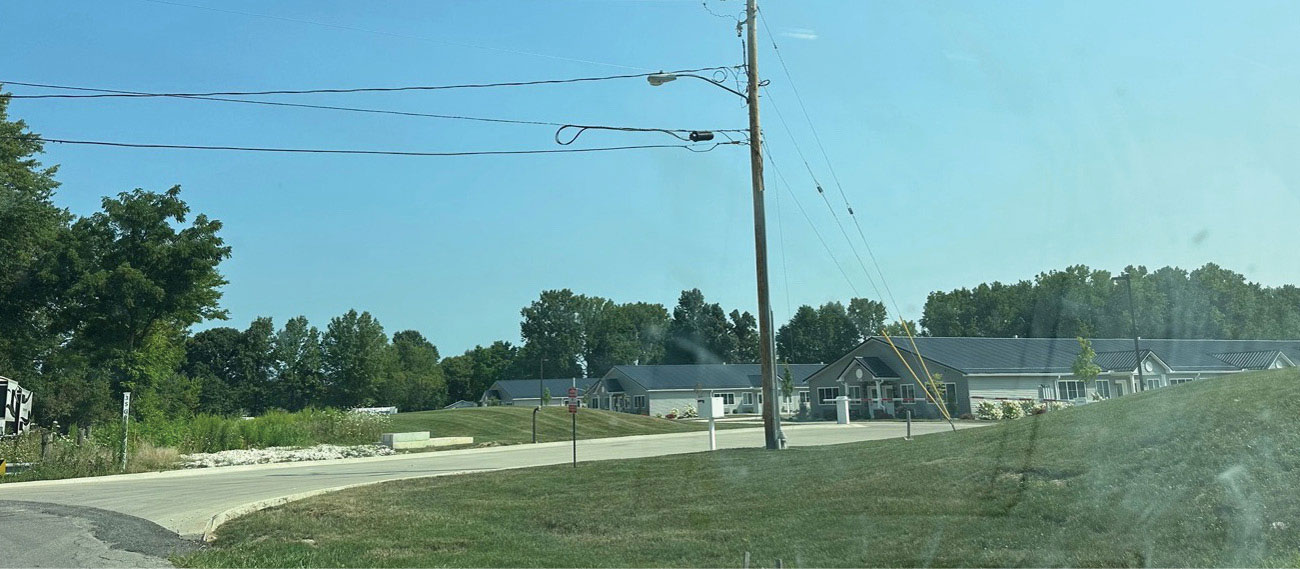
Figure 1. H-2A Worker Housing in Norwalk, Ohio
HOLD ON, WHAT IS H-2A?
Since the 1980s, the farm labor force has typically been non-H-2A, but between 2012 and 2024, H-2A worker numbers grew 351% nationwide (85,248 to 384,865) and 498% in Ohio (770 to 4,601) (U.S. Department of Labor, 2025).
To frame non-H-2A farmworkers, it is estimated that 78% of farmworkers in the United States are of Hispanic descent, 85% of these farmworkers are settled in one community, and 44% of farmworkers are unauthorized (Gold et al., 2020).
H-2A workers, on the other hand, are authorized through a temporary visa for seasonal agriculture for up to 10 months. To hire these workers (predominantly Mexican men) farm employers must provide housing, pay for travel to and from the U.S., provide transportation once a week to purchase necessities, pay the Adverse Effect Wage Rate (AEWR) (a regionally determined wage meant to protect local wages), and attempt to hire locally (Kline, 2022; P. Martin & Rutledge, 2022).
H-2A workers are frequently isolated from their host communities, which can lessen access to social networks that have been essential to farmworker well-being (Durand et al., 2005; Izcara Palacios, 2012). At the same time, H-2A workers have legal status and don’t navigate the stressors of uncertain status that non-H-2A workers often deal with (Harrison & Lloyd, 2013).
WHY ARE FARMERS ADOPTING THE H-2A PROGRAM?
Migration patterns to the U.S. have changed due to increased immigration enforcement and changing demographic and economic realities in Mexico, meaning farmers face growing labor shortages (Durand & Massey, 2019; P. L. Martin, 2017). They have increasingly used H-2A to hire workers without threat of deportation, lessening the stress of navigating mercurial migration policy and rhetoric.
AN INCREASINGLY TEMPORARY HIRED FARM WORKFORCE
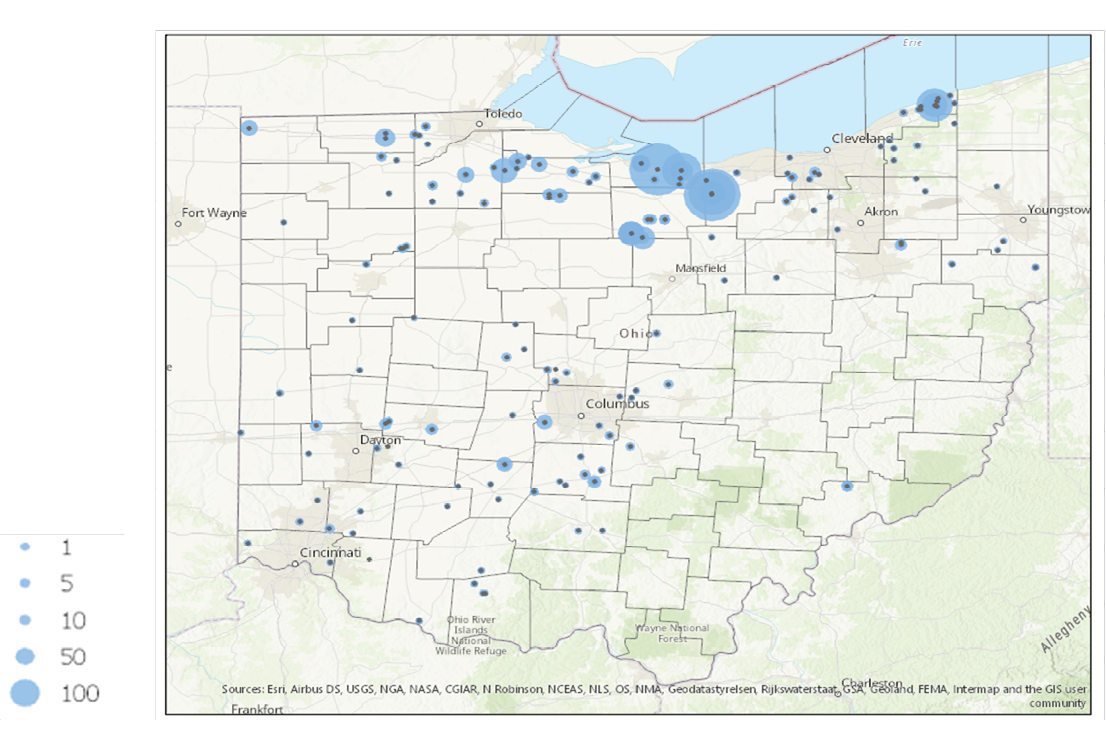
Between 2012 and 2022, H-2A workers grew as a proportion of hired farm laborers from 2.7% to 14.7% nationally and 1.1% to 7.9% in Ohio (USDA, 2025). At the subcounty level, H-2A worksites concentrate workers in communities in northern Ohio (Figure, which may impact community well-being as permanent farmworker settlement decreases (Godínez Z. & Zúñiga, 2005).
Figure 2. H-2A Worksites in Ohio, 2022
WHAT DIFFERENCE DOES THE SHIFT TO H-2A MAKE?
As part of my graduate studies in 2025, I researched how the transition to H-2A has impacted the well-being of workers, farmers, and communities in Ohio, focusing on three core questions:
1. How is the well-being of farmworkers and farmers impacted by different labor recruitment pathways?
2. How does weINDIVIDUAL PERSPECTIVESll-being differ among communities depending on the mix of labor recruitment through H-2A or non-H-2A pathways?
3. How can communities and immigrant support organizations improve well-being in response?
I conducted 33 interviews with farmworkers, farm operators, and community leaders in three small towns in Ohio (Norwalk, Willard, and Orrville)—two of which increased H-2A recruitment in recent years, and one that still relied primarily on traditional farm labor recruitment methods.
Both H-2A and non-H-2A farmworkers were generally satisfied with their compensation. Because they were more likely to bring their families with them, non-H-2A farmworkers were more likely to say that it was hard
to get ahead due to the high costs of living in the United States: “When they were in Mexico, I was able to make ends meet and send money to them. Now that I brought them here, I’ve realized that it’s not enough.” For H-2A farmworkers, on the other hand, the provision of housing, the absence of family, and the AEWR wage rate (which is particularly high in Ohio) meant they could save significant earnings and send money to Mexico.
Where challenges emerged for H-2A workers was in planning for transitions out of farm employment. One worker was worried about when he could no longer work, as he had been an H-2A employee in the U.S. nearly 30 years but was already 59. He lacked retirement benefits in Mexico due to his extended career outside of the country and had no permanent status in the United States due to the H-2A visa non-immigrant status: That’s the only thing I worry about right now. If I live more years and can’t work anymore . . .”
Other H-2A workers mentioned plans to start their own businesses in Mexico or transition to a permanent legal work status in the U.S. as a solution to this problem. Using savings to transition to another livelihood may be a key strategy for H-2A workers, who are easily replaced and have little job security due to the 1-year nature of their contract. As they age, the likelihood of not being rehired increases as they may become slower workers (Izcara Palacios, 2012). Similar challenges confront all farmworkers, but as H-2A grows, solutions for long-term job security merit consideration.
Farmers relying on H-2A and non-H-2A workers alike recognize that Latino farmworkers are crucial to their business success. Farmers who have shifted to hiring through the H-2A program often saw an initial dip in farm productivity, which rebounded as they selected the most skilled workers to return each year. At the same time, farmers highlighted that they felt trapped in the program, since the social networks they had relied on to hire workers in the past were replaced by the bureaucracy of the H-2A program. One farmer noted that, “There is no path to just de-H-2Aing . . . How do you just attract (workers) . . . So you’re shackled to the program for better or worse, and the cost.” Additionally, H-2A farmers noted that the required AEWR wages are high ($19.57/ hour in Ohio, more than $1.40 higher than Michigan), increasing rapidly, and outside of their control (U.S. Department of Labor, 2024).
HOW DOES H-2A ADOPTION AFFECT COMMUNITIES?
ECONOMIC CONTRIBUTIONS
Across all three communities included in the study, I found that farmworkers contributed to local economic vitality regardless of their status. At the same time, by settling for longer periods of time and building a life in the United States, non-H-2A farmworkers tended to make a larger impact on the local economy. In the words of a farmer who had seen both groups of workers in his community over time: “And so then [non-H-2A workers are] renting and buying apartments and houses . . . becoming ingrained in the community, starting their own businesses” H-2A workers, on the other hand, spent less in the United States, sending most earnings to their home country. They also shopped in larger stores in bigger communities where they could get everything they needed in one trip, meaning smaller towns and smaller businesses saw less economic activity compared to settled workers in the past.
SOCIAL INTEGRATION
Social integration has been defined by social scientists as the degree to which newcomers are successfully incorporated into the community (Gouveia et al., 2005). I found that H-2A workers were less integrated than non-H-2A farmworkers, but that the location of their employer-provided housing played an important mediating role. For H-2A workers who lived in housing in the heart of downtown Norwalk, walking to community institutions and events was more feasible. One farmworker shared his experience building relationships at a local gym: “. . . at my gym . . . when we’re about to leave [to return to Mexico], they say, ‘Take care, we’ll be waiting for you here.’” This contrasted with the experience of H-2A workers in Willard who interacted less due to their housing being outside of town.
In Orrville, where H-2A has not been widely used by farmers, interactions between farmworkers and their community manifested notably through sports. While H-2A workers in Willard and Norwalk played with other H-2A farmworkers on farm, non-H-2A farmworkers in Orrville joined a soccer league, which was attended by the whole community. This league became a place where Hispanic farmworkers interacted with the broader Hispanic and non-Hispanic community. One community member described Sunday gatherings centered around the league games: “They started making tournaments . . . and it’s become kind of a place where people can gather . . . and it’s not just Latinos.” Here, a more family-oriented and settled farm workforce fostered greater connection with the outside community.
SOCIAL COHESION
Community social cohesion has been defined as the degree to which individuals in the community feel there are generally good relationships among residents (McCrea et al., 2016). I found that the control farmers have over H-2A workers impacted social cohesion. Hispanic and non- Hispanic community members related that H-2A workers were more likely to behave well in their community, because their employment in the U.S. was conditional. As one noted, “They know at the end of the day, they [H-2A workers] gotta choose. Do I wanna be bad and get back to Mexico, or do I wanna make money, make a living for myself and my family in Mexico?” They contrasted H-2A with the past where single young non- H-2A male farmworkers had been a source of some bad behavior. On the other hand, community members reflected how farmer control over H-2A workers creates potential for the abuse of workers: “Yes, because many of them [H-2A workers] spoke up, and they were the ones who stayed [in Mexico]—they were the ones they didn’t bring back.” Control, then, is a double-edged sword, assisting community members to feel safer, but with the risk that some employers may take advantage of the system.
I also found that social cohesion was tied to the degree of visibility of H-2A workers in receiving communities. Visibility’s relationship to cohesion appeared at the arrival of workers and over time as workers spent time in a community. At arrival, the construction of worker housing or welcoming celebrations dedicated to farmworkers (non-H-2A and H-2A) were a source of tension and could generate conflict. Over time tensions tied to worker housing appeared to diminish in Norwalk, and the location of workers downtown meant that they could easily walk to purchase necessities.
Where visibility remained a challenge over time, it was tied to shopping. In Willard, residents felt that the workers overwhelmed the capacity of the stores and purchased too much. “Many people complain because they say that . . . [H-2A workers] leave them without food because they clean out everything, the meat and all that.” This likely occurred since these workers cannot walk to purchase what they need, and they enter stores in large groups when their employer provides transportation for their required weekly shopping trip. The image of emptied shelves left a bad taste in residents’ mouths and was associated with the H-2A workers, but this occurred largely due to the lack of worker mobility and the lower capacity of a small town like Willard.
CONCLUSIONS
As H-2A adoption continues, communities may see less economic and social interaction as compared to non-H-2A workers, and new sources of tension may arise, but the program still contributes to economic life and H-2A workers may form relationships given the right conditions. Using existing farmworker outreach infrastructure to financially plan with young H-2A workers may contribute to better exit paths from the program. Further, siting H-2A housing within a larger town and busing the workers to the farm daily may offer the workers more flexibility to get what they need when they need it outside of a once-weekly trip. Finally, the Farm Workforce Modernization Act, which has been introduced numerous times in Congress, merits consideration as it would address AEWR challenges, extend H-2A visa lengths, and offer paths to permanent residency, perhaps offering necessary compromises to satisfy challenges faced by numerous parties (Arcury & Quandt, 2020; Held, 2023).
References
Arcury, T. A., & Quandt, S. A. (Eds.). (2020). Latinx Farmworkers in the Eastern United States: Health, Safety, and Justice. Springer
International Publishing. https://doi.org/10.1007/978-3-030-36643-8
Durand, J., & Massey, D. S. (2019). Debacles on the Border: Five Decades of Fact-Free Immigration Policy. The ANNALS of the American Academy of Political and Social Science, 684(1), 6–20. https://doi.org/10.1177/0002716219857647
Durand, J., Massey, D. S., & Capoferro, C. (2005). The New Geography of Mexican Immigration. In V. M. Godínez Z. & V. Zúñiga (Eds.), New destinations: Mexican immigration in the United States. Russell Sage Foundation.
Godínez Z., V. M., & Zúñiga, V. (Eds.). (2005). New destinations: Mexican immigration in the United States. Russell Sage Foundation.
Gold, A., Fung, W., Gabbard, S., & Carroll, D. (2020). Findings from the National Agricultural Workers Survey (NAWS) 2019–2020.
Gouveia, L., Carranza, M., & Cogua, J. (2005). The Great Plains Migration: Mexicanos and Latinos in Nebraska. In V.
M. Godínez Z. & V. Zúñiga (Eds.), New destinations: Mexican immigration in the United States. Russell Sage Foundation.
Harrison, J., & Lloyd, S. (2013). New Jobs, New Workers, and New Inequalities: Explaining Employers’ Roles in Occupational Segregation by Nativity and Race. Social Problems, 60(3), 281–301. https://doi.org/10.1525/sp.2013.60.3.281
Held, L. (2023, February 22). Congress Killed a Bill to Give Farmworkers a Path to Citizenship. What Comes Next? Civil Eats. https://civileats.com/2023/02/22/congress-killed-a-bill-to- give-farmworkers-a-path-to-citizenship-what-comes-next/
Izcara Palacios, S. P. (2012). El aislamiento social de los trabajadores con visas H-2A. El ejemplo de los jornaleros tamaulipecos. región
y sociedad, 24(53). https://doi.org/10.22198/rys.2012.53.a170
Kline, A. (2022). Latino H2A Workers and Their Importance for Ohio’s Agricultural Industries. Ohio Commission on Hispanic/Latino Affairs
Martin, P. L. (2017). Immigration and Farm Labor: Challenges and Opportunities. Gianinni Foundation.
Martin, P., & Rutledge, Z. (2022). Proposed changes to the H-2A program would affect labor costs in the United States and California. California Agriculture, 75(3), 135–141. https://doi.org/10.3733/ca.2021a0020
McCrea, R., Walton, A., & Leonard, R. (2016). Developing a Model of Community Wellbeing and Resilience in Response to Change. Social Indicators Research, 129(1), 195–214. https://doi.org/10.1007/s11205-015-1099-y
U.S. DOL. (2024). H-2A Adverse Effect Wage Rates (AEWRs) | Flag.dol. gov. https://flag.dol.gov/wage-data/adverse-effect-wage-rates
U.S. DOL. (2025). Performance Data. DOL. https://www.dol.gov/agencies/eta/foreign-labor/performance
USDA. (2025). Census of Agriculture—2022 Census Publications—State and County Profiles—Ohio. https://www.nass.usda.gov/Publications/AgCensus/2022/Online_Resources/County_Profiles/Ohio/